1. 多态介绍
2. 方法的多态
1
2
3
4
5
6
7
8
9
10
11
12
13
14
15
16
17
18
19
20
21
22
23
24
25
26
27
28
29
30
31
32
33
34
| public class Poly01_Method {
public static void main(String[] args) {
Base01 base = new Base01();
Sub01 sub = new Sub01();
base.say();
sub.say();
sub.sum(10,20);
sub.sum(10,20,30);
}
}
class Base01 {
public void say(){
System.out.println("hello Base01");
}
public void sum(int i,int j){
System.out.println(i+" + "+j+" = "+(i+j));
}
}
class Sub01 extends Base01 {
public void say() {
System.out.println("hello Sub01");
}
public void sum(int i, int j, int k) {
System.out.println(i + " + " + j + " + " + k + " = " + (i + j + k));
}
}
|
3. 对象的多态
1
2
3
| 编译类型 对象名 = new 运行类型();
|
- 编译类型在定义对象时就确定了,不能改变
- 运行类型是可以变化的
- 一个对象的编译类型和运行类型可以不一致
- 对象调用方法的时候,调用的是运行类型的方法
1
2
3
4
5
6
7
| Animal animal = new Dog();
animal = new Cat();
|
1
2
3
4
5
6
7
8
9
10
11
12
13
14
15
16
17
18
19
20
21
22
23
24
25
26
27
28
29
30
31
| public class PolyObject {
public static void main(String[] args) {
Animal animal = new Dog();
animal.say();
animal = new Cat();
animal.say();
}
}
class Animal {
public void say() {
System.out.println("动物会叫");
}
}
class Cat extends Animal {
public void say() {
System.out.println("小猫喵喵叫");
}
}
class Dog extends Animal {
public void say() {
System.out.println("小狗汪汪叫");
}
}
|
4. 多态代码示例
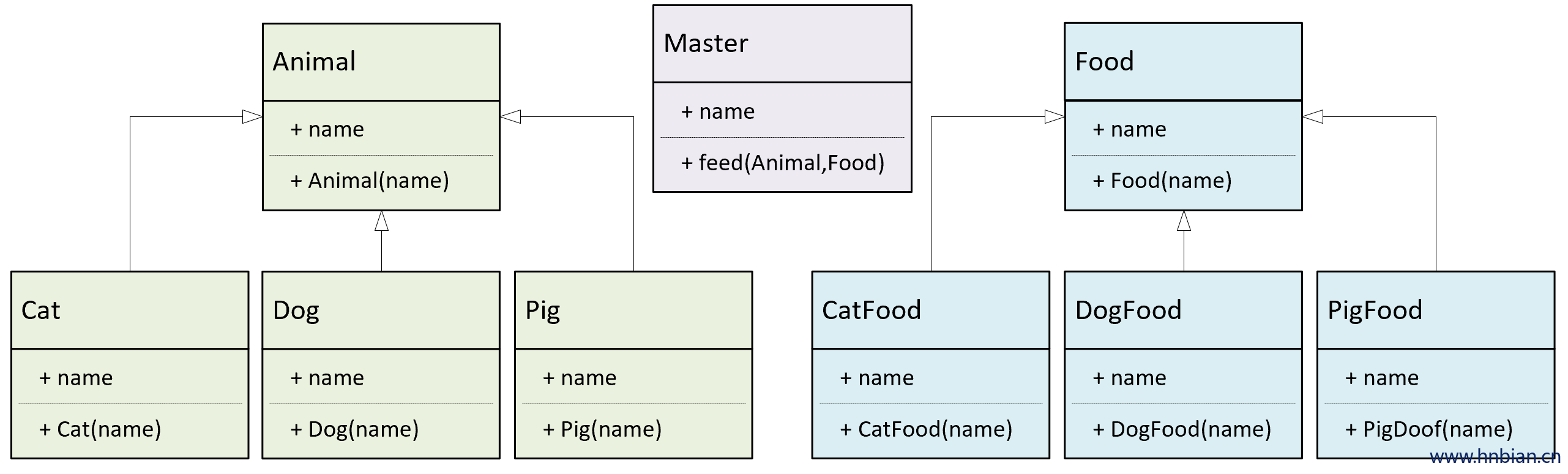
使用多态的方式能编写一个程序, 有主人类Master, 有feed 方法, 可以给不同动物喂不同食物
1
2
3
4
5
6
7
8
9
10
11
12
13
14
15
16
17
18
19
20
21
22
23
24
25
26
27
28
29
30
31
32
33
34
35
36
37
38
39
40
41
42
43
44
45
46
47
48
49
50
51
52
53
54
55
56
57
58
59
60
61
62
63
64
65
66
67
68
69
70
71
72
73
74
75
| public class Master {
public static void main(String[] args) {
Animal dog = new Dog("小狗");
System.out.println(dog.name);
Food dogFood = new DogFood("狗粮");
Master master = new Master();
master.feed(dog,dogFood);
Animal cat = new Cat("小猫");
Food catFood = new CatFood("猫粮");
master.feed(cat,catFood);
Animal pig = new Pig("小猪");
Food pigFood = new PigFood("猪粮");
master.feed(pig,pigFood);
}
public void feed(Animal animal,Food food){
System.out.println(" 给 "+animal.name+" 喂 "+food.name);
}
}
class Animal{
String name;
public Animal(String name) {
this.name = name;
}
}
class Dog extends Animal{
String name;
public Dog(String name) {
super(name);
this.name = name;
}
}
class Cat extends Animal{
String name;
public Cat(String name) {
super(name);
this.name = name;
}
}
class Pig extends Animal{
String name;
public Pig(String name) {
super(name);
this.name = name;
}
}
class Food{
String name;
public Food(String name) {
this.name = name;
}
}
class DogFood extends Food{
String name;
public DogFood(String name) {
super(name);
this.name = name;
}
}
class CatFood extends Food{
String name;
public CatFood(String name) {
super(name);
this.name = name;
}
}
class PigFood extends Food{
String name;
public PigFood(String name) {
super(name);
this.name = name;
}
}
|
5. 多态的向上转型
语法:
1
2
3
| 编译类型 对象名 = new 运行类型();
|| || ||
父类类型 引用名 = new 子类类型();
|
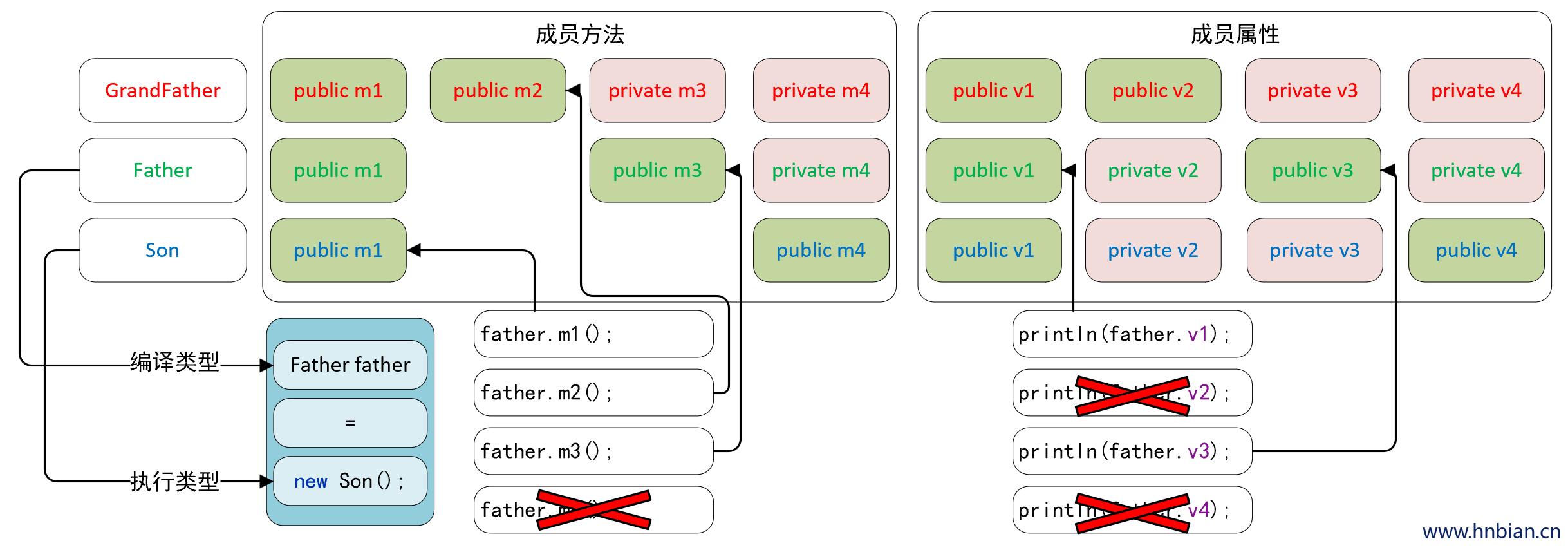
编译类型(父类): 决定了可以调用哪些方法和属性,即:(在遵守访问权限的前提下),可以调用父类中的所有的属性和方法,也就是说无法调用子类中特有的属性和方法。
运行类型(子类):决定了属性和方法调用后的具体执行效果。如果子类没有则执行效果看父类方法。
方法的查找顺序跟继承中的方法查找顺序一致,先从子类(运行类型)中查找, 子类没有则去父类查找
属性没有重写之说,属性的值要看编译类型
1
2
3
4
5
6
7
8
9
10
11
12
13
14
15
16
17
18
19
20
21
22
23
24
25
26
27
28
29
30
31
32
33
34
35
36
37
38
39
40
41
42
43
44
45
46
47
48
49
50
51
52
53
| public class Poly03_Upward {
public static void main(String[] args) {
Father06 father = new Son06();
System.out.println(father.v1);
System.out.println(father.v3);
father.m1();
father.m2();
father.m3();
}
}
class GrandFather06{
public String v1 = "GrandFather - 10";
public String v2 = "GrandFather - 20";
private String v3 = "GrandFather - 30";
private String v4 = "GrandFather - 40";
public void m1(){ System.out.println("GrandFather method m1"); }
public void m2(){ System.out.println("GrandFather method m2"); }
private void m3(){ System.out.println("GrandFather method m3"); }
private void m4(){ System.out.println("GrandFather method m4"); }
}
class Father06 extends GrandFather06{
public String v1 = "Father - 10";
private String v2 = "Father - 20";
public String v3 = "Father - 30";
private String v4 = "Father - 40";
public void m1(){ System.out.println("Father method m1"); }
public void m3(){ System.out.println("Father method m3"); }
private void m4(){ System.out.println("Father method m4"); }
}
class Son06 extends Father06{
public String v1 = "Son - 10";
private String v2 = "Son - 20";
private String v3 = "Son - 30";
public String v4 = "Son - 40";
public void m1(){ System.out.println("Son method m1"); }
public void m4(){ System.out.println("Son method m4"); }
}
|
6. 多态的向下转型
语法:
1
2
3
| 编译类型 对象名 = (变异类型)运行类型
|| || || ||
子类类型 引用名 = (子类类型)父类引用
|
只能强转父类的引用, 不能强转父类的对象
要求父类的引用必须指向的是当前目标类型的对象
当向下转型后, 可以调用子类类型中所有的成员。
1
2
3
4
5
6
7
8
9
10
11
12
13
14
15
16
17
18
19
20
21
22
23
24
25
26
27
28
29
30
31
32
33
34
35
36
37
38
39
40
41
42
43
44
45
46
47
48
49
50
51
52
53
| public class Poly04_Downward {
public static void main(String[] args) {
Father04 father = new Son04();
Son04 son = (Son04)father;
System.out.println(son.v1);
son.m1();
son.m2();
son.m3();
son.m4();
}
}
class Son04 extends Father04{
public String v1 = "Son - 10";
private String v2 = "Son - 20";
private String v3 = "Son - 30";
public String v4 = "Son - 40";
public void m1(){ System.out.println("Son method m1"); }
public void m4(){ System.out.println("Son method m4"); }
}
class Father04 extends GrandFather04{
public String v1 = "Father - 10";
private String v2 = "Father - 20";
public String v3 = "Father - 30";
private String v4 = "Father - 40";
public void m1(){ System.out.println("Father method m1"); }
public void m3(){ System.out.println("Father method m3"); }
private void m4(){ System.out.println("Father method m4"); }
}
class GrandFather04{
public String v1 = "GrandFather - 10";
public String v2 = "GrandFather - 20";
private String v3 = "GrandFather - 30";
private String v4 = "GrandFather - 40";
public void m1(){ System.out.println("GrandFather method m1"); }
public void m2(){ System.out.println("GrandFather method m2"); }
private void m3(){ System.out.println("GrandFather method m3"); }
private void m4(){ System.out.println("GrandFather method m4"); }
}
|
7. 多态中的 instanceOf
instanceOf 比较操作符,用于判断对象的 执行类型是否为某类型或某类的子类型
1
2
3
4
5
6
7
8
9
10
11
12
13
14
15
16
17
18
19
20
21
22
23
24
25
26
27
28
29
30
31
32
33
34
| public class Poly05_Instanceof {
public static void main(String[] args) {
Sub sub = new Sub();
System.out.println("sub instanceof Sub = "+(sub instanceof Sub));
System.out.println("sub instanceof Base = "+(sub instanceof Base));
Base base = new Base();
System.out.println("base instanceof Sub = "+(base instanceof Sub));
System.out.println("base instanceof Base = "+(base instanceof Base));
Sub sub2 = new Base();
System.out.println(sub.count);
System.out.println("sub2 instanceof Sub = "+(sub2 instanceof Sub));
System.out.println("sub2 instanceof Base = "+(sub2 instanceof Base));
Base base2 = (Base)sub2;
System.out.println("base2 instanceof Sub = "+(base2 instanceof Sub));
System.out.println("base2 instanceof Base = "+(base2 instanceof Base));
}
}
class Sub{
int count = 20;
}
class Base extends Sub{
int count = 10;
}
|
8. 动态绑定机制
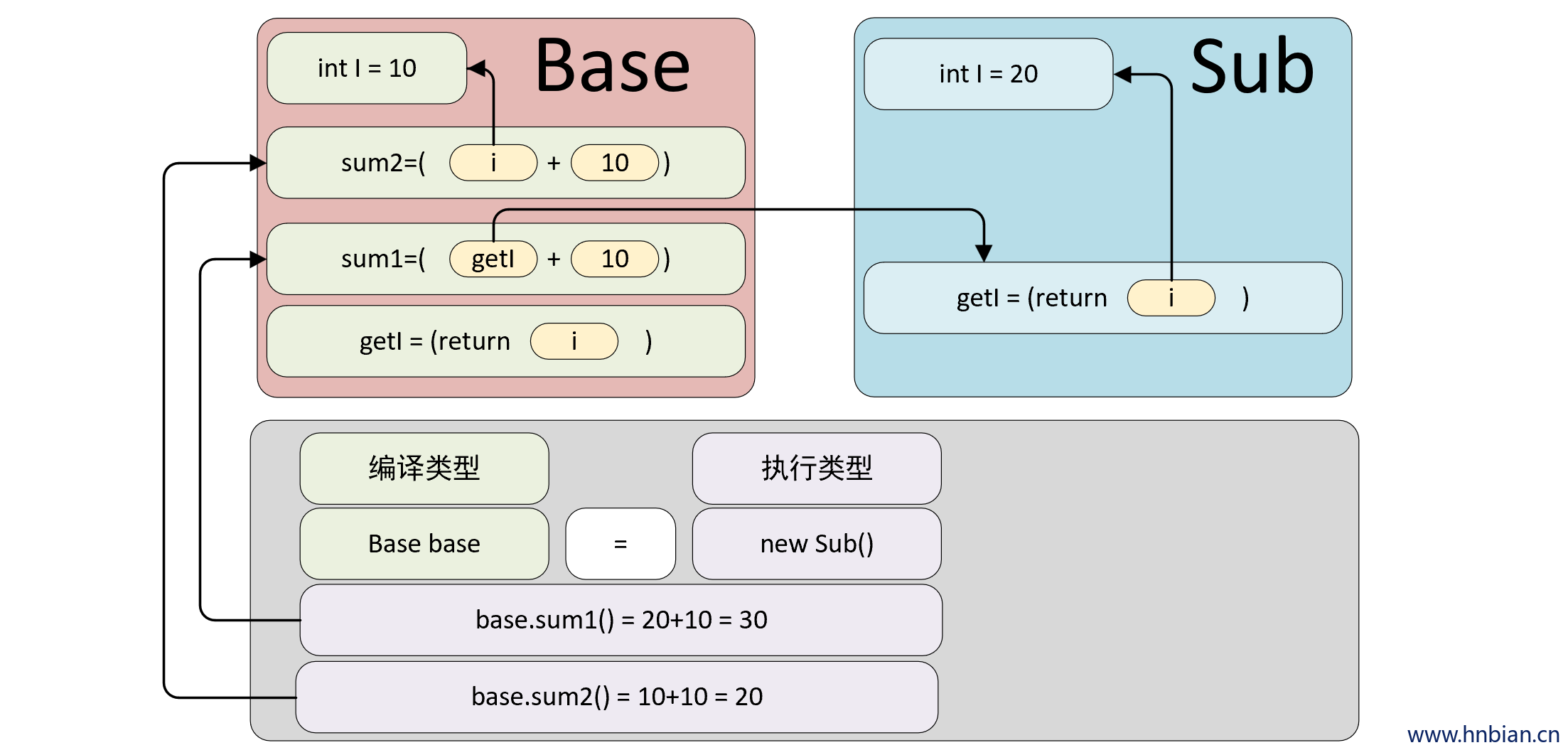
- 对象的属性没有动态绑定机制,哪里使用就调用哪里的属性
- 当调用方法的时候, 方法和运行类型(内存地址)绑定
1
2
3
4
5
6
7
8
9
10
11
12
13
14
15
16
17
18
19
20
21
22
23
24
25
26
27
28
| public class Poly06_DynamicBanding {
public static void main(String[] args) {
Base06 a = new Sub06();
System.out.println(a.sum1());
System.out.println(a.sum2());
System.out.println(a.i);
}
}
class Base06 {
int i = 10;
public int sum1(){ return getI()+10; }
public int sum2(){ return i+10; }
public int getI() { return i; }
}
class Sub06 extends Base06 {
int i = 20;
@Override
public int sum1(){ return i+20; }
@Override
public int sum2(){ return i+10; }
@Override
public int getI() { return i; }
}
|
1
2
3
4
5
6
7
8
9
10
11
12
13
14
15
16
17
18
19
20
21
22
23
24
25
26
| public class Poly07_DynamicBanding {
public static void main(String[] args) {
Base07 a = new Sub07();
System.out.println(a.sum1());
System.out.println(a.sum2());
System.out.println(a.i);
}
}
class Base07 {
int i = 10;
public int sum1(){ return getI()+10; }
public int sum2(){ return i+10; }
public int getI() { return i; }
}
class Sub07 extends Base07 {
int i = 20;
@Override
public int getI() { return i; }
}
|
9. 多态的应用
9.1 多态数组
数组中实际存储元素的类型为数字定义类型的子类 该数组即为多态数组
应用实例:
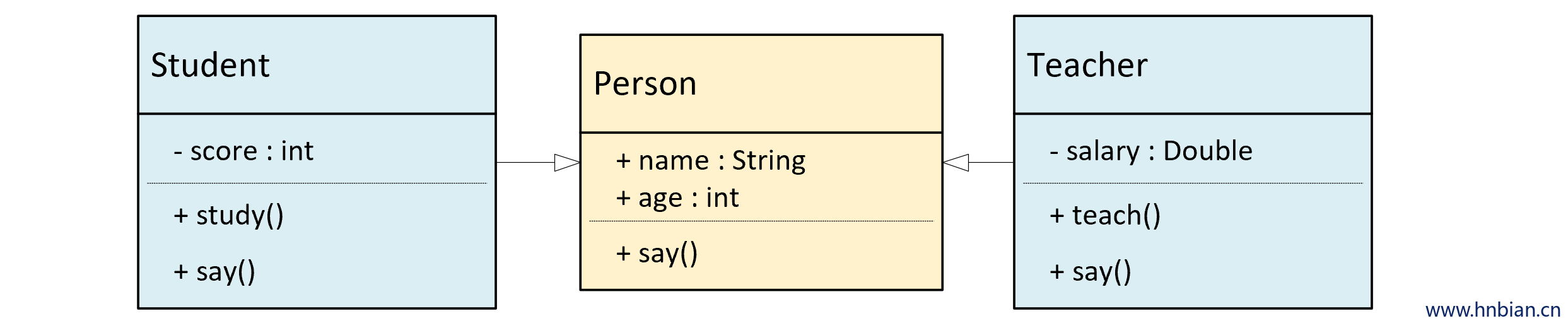
现在有一个继承结构如下,要求创建一个 Person 对象, 两个 Student 对象和两个Teacher 对象,放在一个数组中, 并调用每个对象的say 方法
如果调用子类特有方法, 比如Teacher 有 teach 方法, Student 类有一个study 方法, 怎么调用?
1
2
3
4
5
6
7
8
9
10
11
12
13
14
15
16
17
18
19
20
21
22
23
24
25
26
27
28
29
30
31
32
33
34
35
36
37
38
39
40
41
42
43
44
45
46
47
48
49
50
51
52
53
54
55
56
57
58
59
60
61
62
63
64
65
66
67
68
69
70
71
| public class Poly08_Array {
public static void main(String[] args) {
Person[] persons = new Person[4];
persons[0] = new Student("小明", 12, 90);
persons[1] = new Teacher("张老师", 32, 5000);
persons[2] = new Student("小红", 12, 90);
persons[3] = new Teacher("李老师", 30, 6000);
for (int i = 0; i < persons.length; i++) {
persons[i].say();
if (persons[i] instanceof Student) {
((Student) persons[i]).study();
}
if (persons[i] instanceof Teacher) {
((Teacher) persons[i]).teach();
}
}
}
}
class Person {
public String name;
public int age;
public Person(String name, int age) {
this.name = name;
this.age = age;
}
public void say() {
System.out.println("讲话: ");
}
}
class Student extends Person {
int i = 20;
private int score;
public Student(String name, int age, int score) {
super(name, age);
this.score = score;
}
public void say() {
super.say();
System.out.println(name+" 不懂提问"+ i);
}
public void study() {
System.out.println(name+" 好好学习,天天向上。"+ i);
}
}
class Teacher extends Person {
int i = 30;
private int salary;
public Teacher(String name, int age, int salary) {
super(name, age);
this.salary = salary;
}
public void say() {
super.say();
System.out.println(name+" 讲课 "+ i);
}
public void teach() {
System.out.println(name+" 教书育人"+ i);
}
}
|
9.2 多态参数
传送的实参类型为形参类型的子类, 即为参数的多态
使用示例:
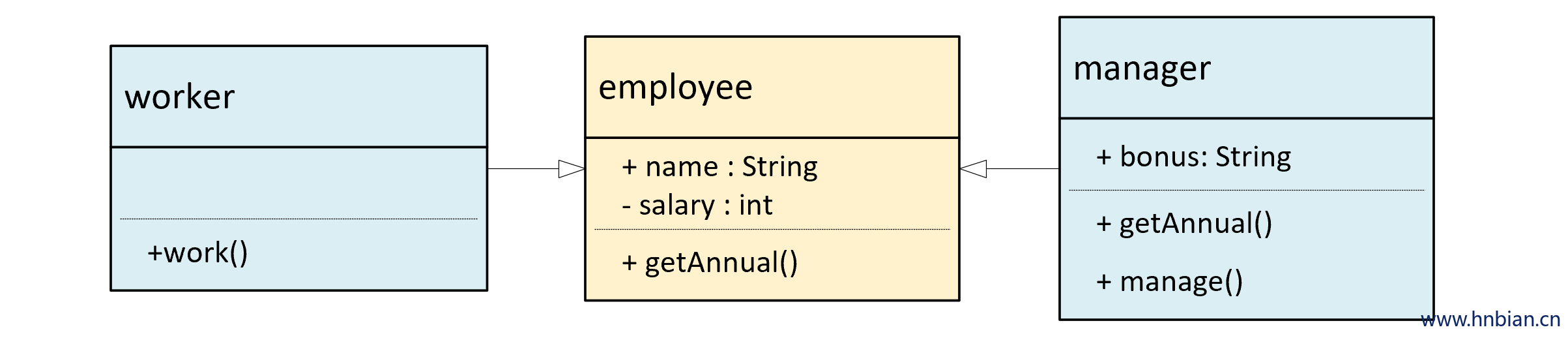
定义员工类(Employee), 包含姓名 和 月工资(private), 以及计算年工资的方法(getAnnual)
普通员工类 和 经理类 继承了 员工类
测试类中添加 show(Employee e) 方法 实现获取任何员工的年工资,并在main 方法中调用该方法
测试类中添加 testWork 方法,如果是普通员工,则调用work 方法, 如果是经理则调用 manage方法
1
2
3
4
5
6
7
8
9
10
11
12
13
14
15
16
17
18
19
20
21
22
23
24
25
26
27
28
29
30
31
32
33
34
35
36
37
38
39
40
41
42
43
44
45
46
47
48
49
50
51
52
53
54
55
56
57
58
59
60
61
62
63
64
65
66
67
68
69
70
71
72
73
| public class Poly09_Parameters {
public static void main(String[] args) {
Employee tom = new Worker("tom",1000);
Employee jerry = new Manager("jerry",2000,10000);
Poly09_Parameters ploy = new Poly09_Parameters();
ploy.show(tom);
ploy.show(jerry);
ploy.work(tom);
ploy.work(jerry);
}
public void show(Employee employee){
System.out.println(employee.getAnnual());
}
public void work(Employee employee){
if(employee instanceof Worker){
((Worker) employee).work();
}
if(employee instanceof Manager){
((Manager) employee).manage();
}
}
}
class Employee {
public Employee(String name, double salary) {
this.name = name;
this.salary = salary;
}
private String name;
private double salary;
public double getAnnual() {
return salary * 12;
}
}
class Worker extends Employee{
public Worker(String name, double salary) {
super(name, salary);
}
public void work(){
System.out.println("普通员工工作");
}
@Override
public double getAnnual(){
System.out.println("计算员工年薪");
return super.getAnnual();
}
}
class Manager extends Employee{
private double bonus;
public Manager(String name, double salary,double bonus) {
super(name, salary);
this.bonus = bonus;
}
public void manage(){
System.out.println("管理公司");
}
@Override
public double getAnnual(){
System.out.println("计算经理年薪");
return super.getAnnual() + bonus;
}
}
|

![14.[Java 面向对象] Object 类介绍](https://images.hnbian.cn/FimocZ3PW_vS9NpobgoUVI6QP-AX)